


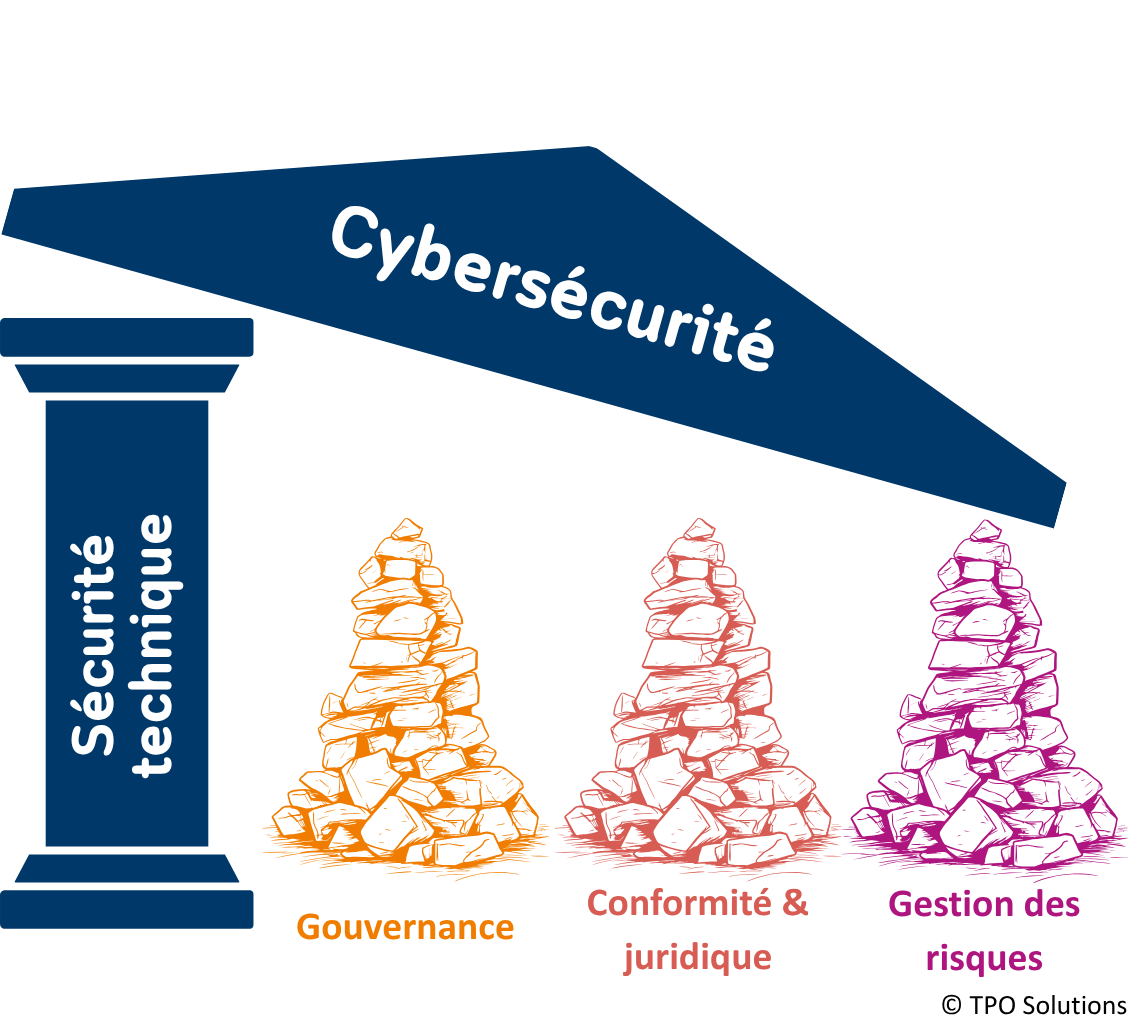
In response to the requirements introduced by the NIS2 Directive, many organisations are realising that cybersecurity can no longer be approached solely from a technical perspective. For a long time, it was perceived primarily as an IT responsibility. Today, this approach is showing its limitations. 👉 Risks are cross-functional 👉 Dependencies are multiple 👉 The […]
In response to the requirements introduced by the NIS2 Directive, many organisations are realising that cybersecurity can no longer be approached solely from a technical perspective.
For a long time, it was perceived primarily as an IT responsibility.
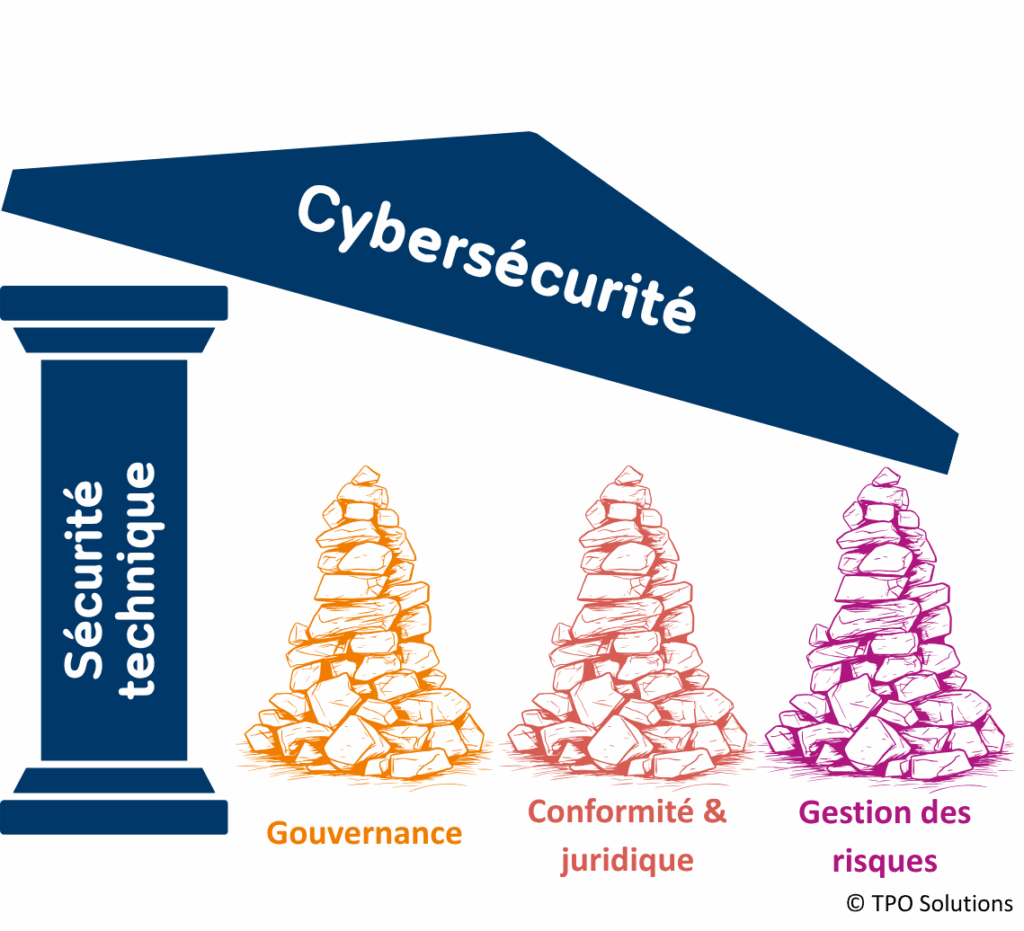
Today, this approach is showing its limitations.
👉 Risks are cross-functional
👉 Dependencies are multiple
👉 The impacts affect the entire business
To be sustainable and effective, cybersecurity must now be part of a structured approach that integrates several complementary dimensions.
A structured approach based on four pillars
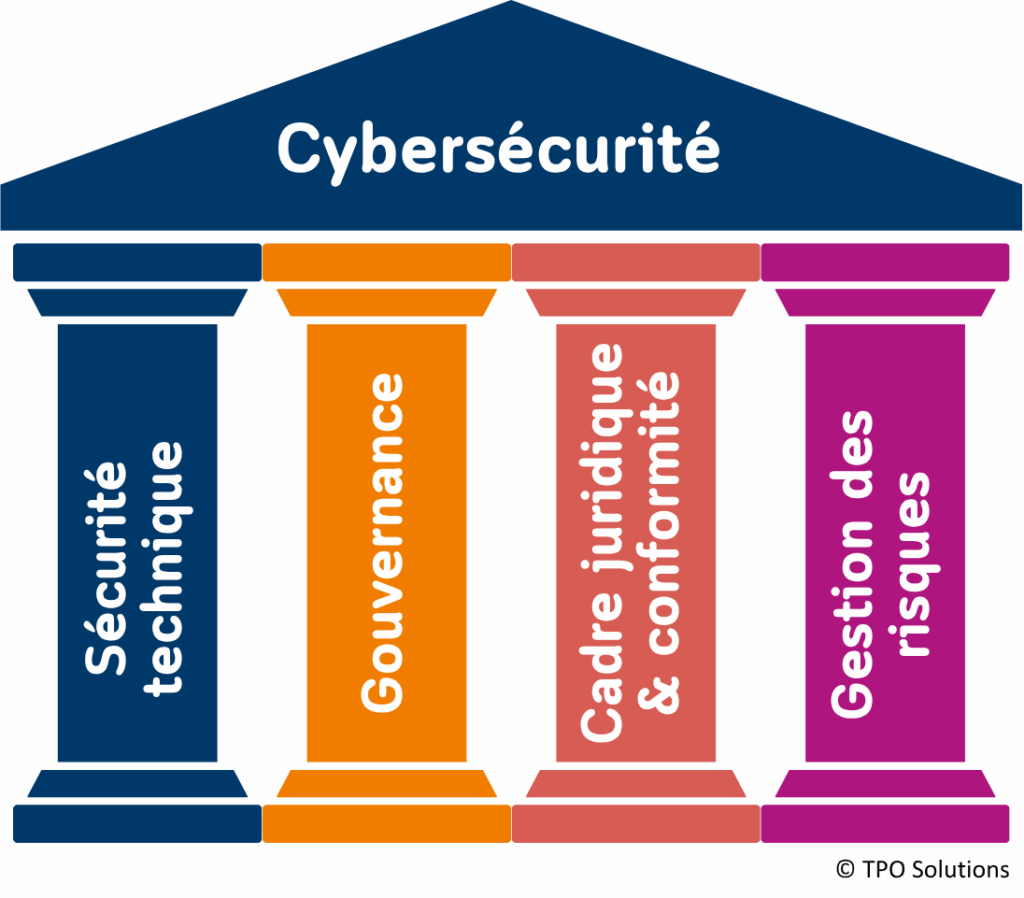
As illustrated in the diagram, a robust cybersecurity strategy generally rests on four main pillars:
• Technical security
Protection of systems, vulnerability management and IT infrastructure security
• Governance
Internal organisation, roles and responsibilities, decision-making and oversight
• Legal framework and compliance
Compliance with regulatory requirements (NIS2, GDPR, DORA, AI Act, etc.), contract management and legal obligations
• Risk management
Identification, analysis and prioritisation of threats, including supplier-related risks
Connecting the different dimensions to improve consistency
These pillars are interdependent.
👉 A technical measure without clear governance remains ineffective
👉 Compliance without risk management remains theoretical
👉 Governance without operational visibility remains limited
The challenge is therefore to connect these dimensions in order to create a coherent and operational approach.
What NIS2 really changes
The NIS2 Directive requires a change of perspective.
It is no longer simply a matter of implementing technical measures, but rather of:
• Structuring cybersecurity across the entire organisation
• Integrating governance and accountability considerations
• Taking supplier dependencies into account
• Implementing continuous risk management
👉 Cybersecurity is becoming a strategic issue involving management, legal teams, IT and risk management.
Structuring cybersecurity to gain greater control
The most advanced organisations do not simply add more tools.
They develop a comprehensive and structured vision that is aligned with their business challenges.
This involves, in particular:
• A clear mapping of systems and data flows
• Defined and operational governance
• The integration of regulatory requirements
• Coherent and continuous risk management
Structuring cybersecurity is no longer optional: it is a condition for long-term viability.
It is essential for meeting NIS2 requirements and sustainably strengthening the organisation’s resilience.
💡 IT security, governance, compliance and risk management brought together in a coherent and operational harmony that is aligned with your organisation.
Would you like to find out more?
👉 Contact us:
Sabine Mersch
info@tpo.solutions
+32 87 71 02 00
www.tpo.solutions